

Suitable for: Chickens, geese, ducks, quails, pigeons
Application: Incubation equipment
External dimensions: 17.5*17.5*16CM
Packaging instructions: Color box packaging
Temperature control range: 20℃-40℃
Type: Incubator
After-sales service: One-year warranty
Product specifications: 18.5x18.5x16.5cm mini incubator, suitable for teaching and research settings.
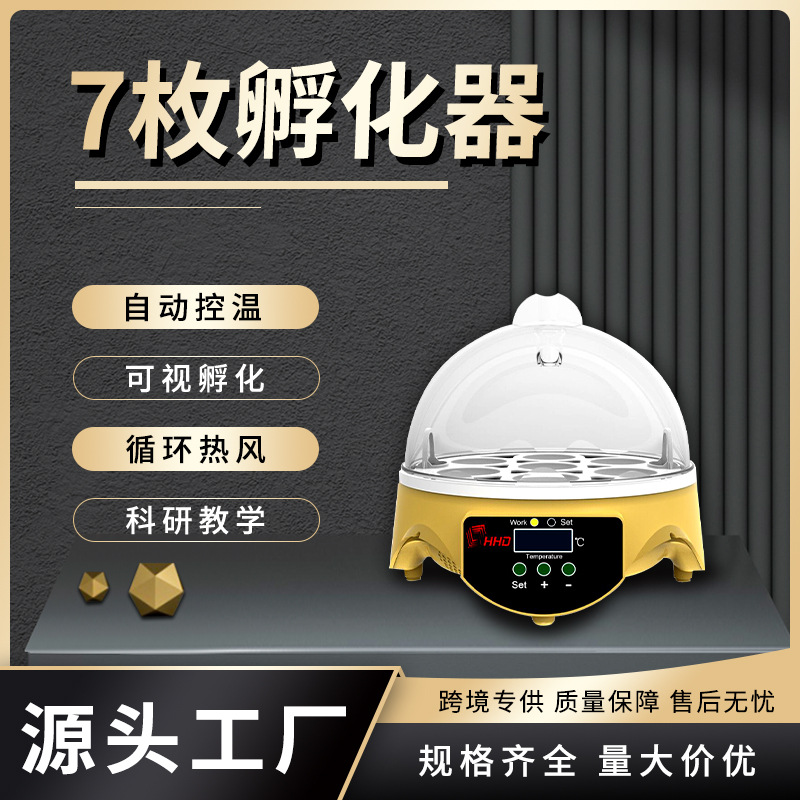
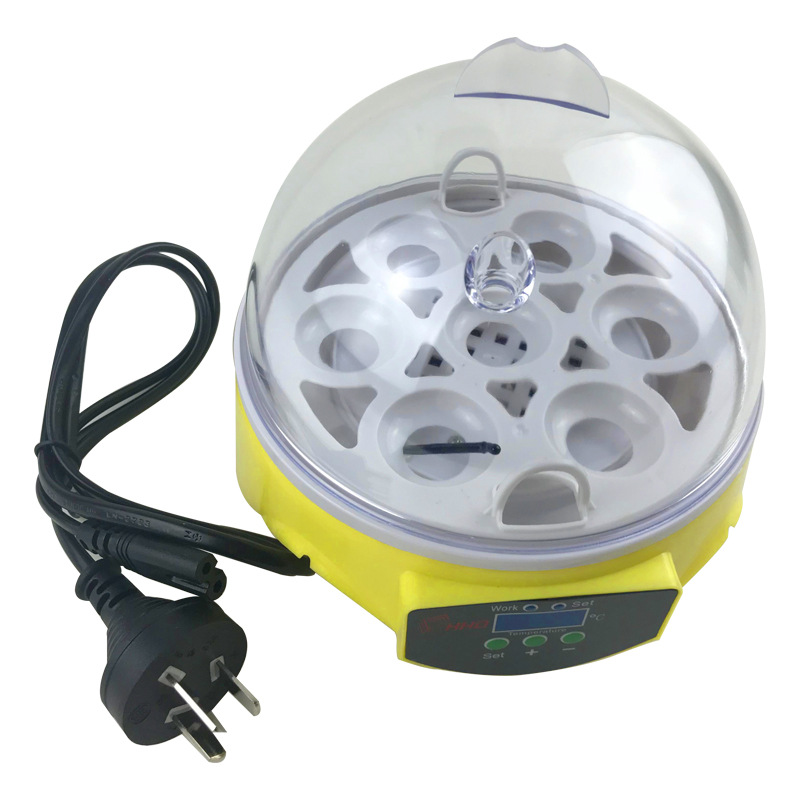
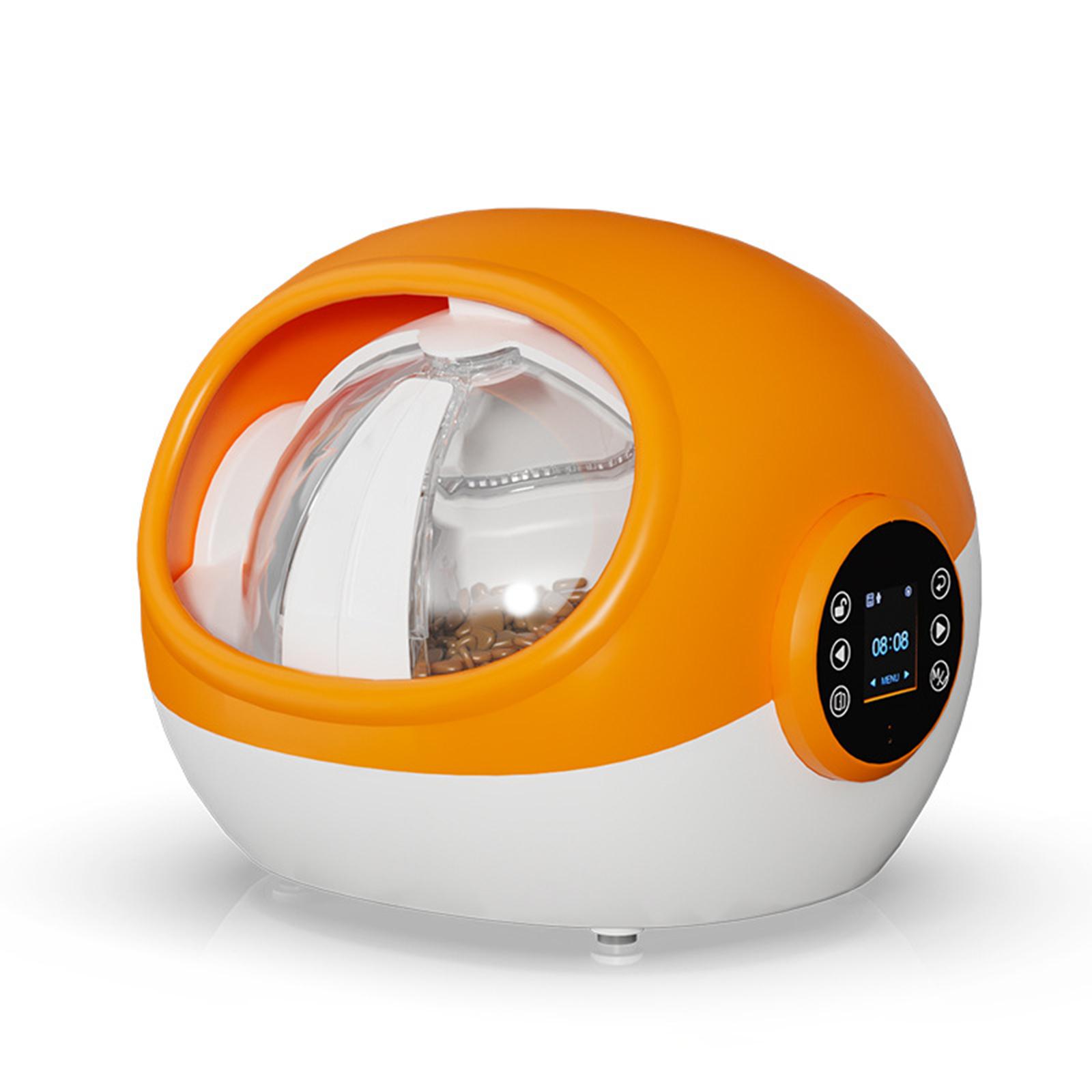
This intelligent mini incubator measures 16×16×16 cm, operates on 110V/220V, weighs 0.4 kg, and can incubate 7 eggs. It is suitable for eggs from chickens, ducks, quails, parrots, and other poultry.
Educational learning: helping children understand the birth of life and observe the process of life formation.
Separable egg tray: The hollowed-out egg tray design ensures air and heat circulation and is easy to clean.
Temperature sensing device: to monitor the temperature inside the chamber in real time, so as to facilitate timely adjustments.
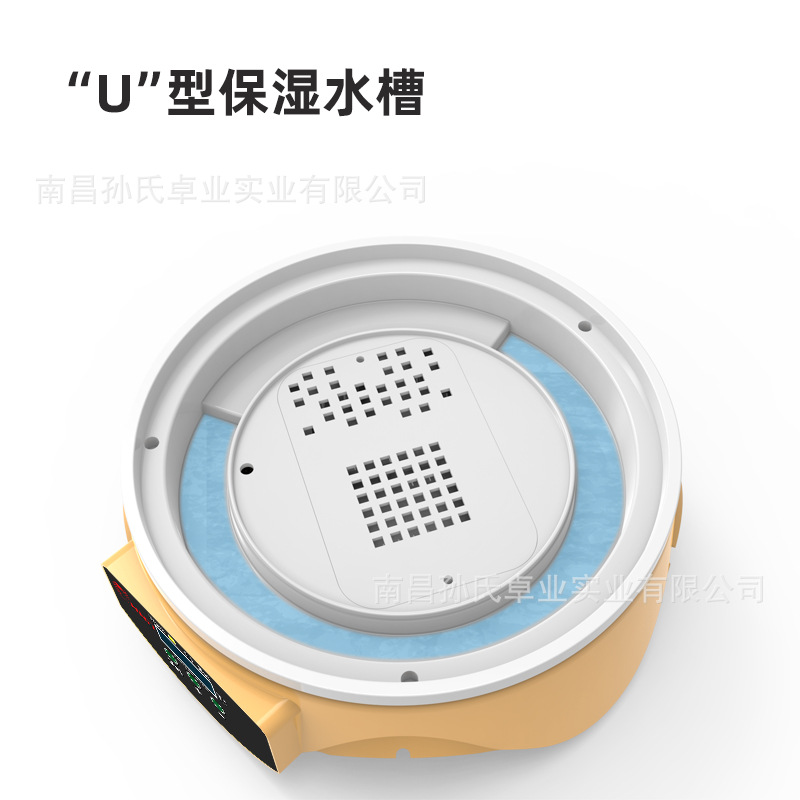
Humidity control water tank: Add water to control humidity. Do not exceed the red circle to prevent damage to the machine.
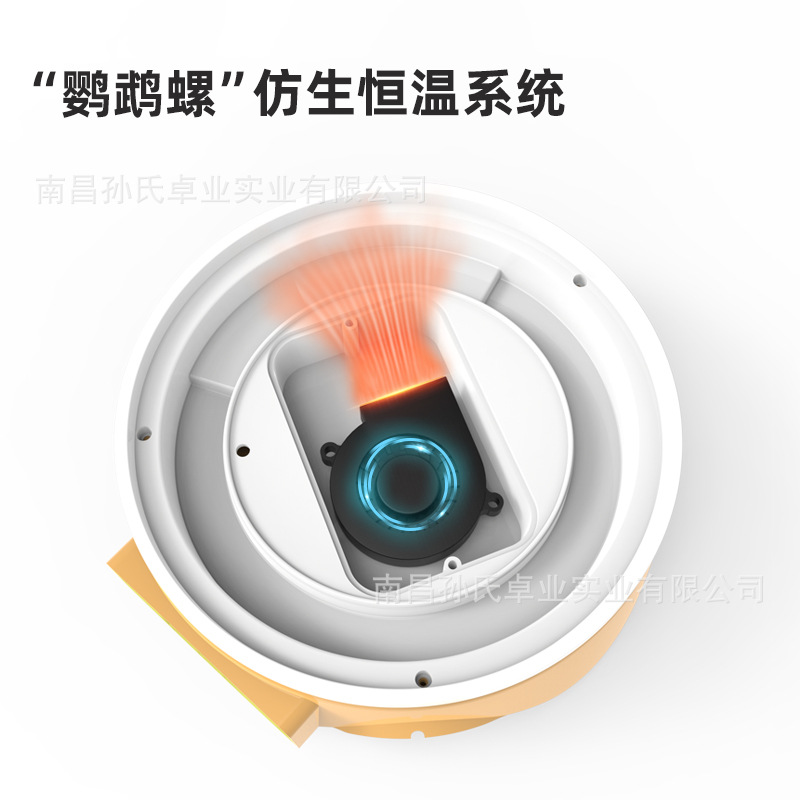
Thermal circulation system: Based on a large amount of research and development data, a reasonable heat dissipation hole design and thermal circulation system are adopted to increase the uniformity of heat dissipation, eliminate dead zones, and provide a strong guarantee for the hatching rate.
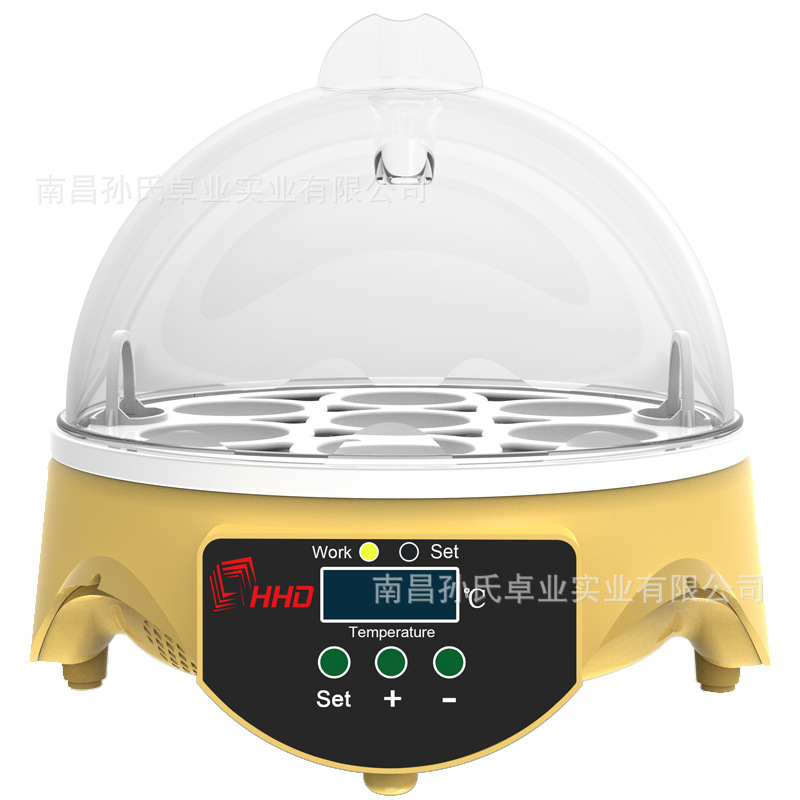
Transparent lid: The innovative use of a transparent lid makes it easy to observe the hatching process and can also be used as a teaching tool.
Intelligent temperature control: A digital panel at the bottom of the incubator displays the real-time temperature inside the chamber intuitively. When power is connected, the green LED light illuminates, indicating the incubator is in working mode; pressing the SET button illuminates the red LED, indicating the temperature setting mode has been activated, and the +/- buttons can be used to adjust the temperature.
Points to note when selecting hatching eggs:
1. The shape of the eggs used for incubation is very important. Deformed, cracked, or abnormally shaped eggs are not suitable. At the same time, the selected eggs must be clean, and the eggs to be incubated should not be washed.
2. The eggs to be incubated must be fertilized. Artificially raised eggs cannot be incubated. How to tell: Hold the egg up to a light source. If you see opaque, fluffy substances or other inclusions near the yolk, it is a fertilized egg; otherwise, it is not.
3. Eggs must be fresh to be hatched. Chicken and duck eggs should be within 7 days of hatching, and goose eggs should be within 10 days of hatching. Storing them for too long will affect the hatching success rate.
Understanding Egg Structure: An egg consists of egg white, yolk membrane, yolk, chalaza, and air cell. Only the inner wall of the yolk contains an invisible fertilized egg, which will only divide when the temperature is suitable. The rest of the yolk, egg white, and shell are not cells, but are composed of proteins, phospholipids, fats, and inorganic salts, serving to provide nutrition and protect the embryo.
Embryonic development process:
Development 1 day
4 days of development
After 5 days of development, the rudiments of eyes have appeared.
After 6 days of development, two eyes can be seen.
On the 8th day, the embryonic form is formed and it becomes active.
On days 9-10, the egg sinks into the yolk, and can distinguish its mouth and claws; its blood vessels thicken.
On the 11th day, feathers grew on the abdomen, and the allantois closed.
On days 12-13, the fur grows out evenly, and the upper and lower jaws become clearly defined.
Between days 16 and 18, the fur grows fully, scales and claws appear, and protein is almost gone.
On the 21st day, the chicks hatched.
Careful observation is needed during the hatching stage because the eggshell thickness varies. Some eggshells are thicker, and the chicks may not be able to break the shell even after pecking for a long time. At this time, you need to help them. You can use chopsticks or other objects to gently tap a small hole to help the chicks hatch.
Incubation parameter reference:
Chickens: Incubation period 21 days, egg weight 38.0 grams, incubation temperature 37.5℃±0.5℃, humidity 55-70%, hatching temperature 37.5℃±0.5℃, humidity 65-85%.
Peacock: Incubation period 28 days, egg weight 100-120 grams, incubation temperature 37.8℃±0.5℃, humidity 60-75%, hatching temperature 37.3℃±0.5℃, humidity 65-85%.
Turkey: Incubation period 28 days, egg weight 75-80 grams, incubation temperature 37.7℃±0.5℃, humidity 60-75%, hatching temperature 37.2℃±0.5℃, humidity 65-85%
Ducks: Incubation period 28 days, egg weight 80-100 grams, incubation temperature 37.8℃±0.5℃, humidity 60-75%, hatching temperature 37.3℃±0.5℃, humidity 65-85%.
Geese: Incubation period 30 days, egg weight 100-120 grams, incubation temperature 37.6℃±0.5℃, humidity 65-80%, hatching temperature 37.1℃±0.5℃, humidity 65-85%
Pigeons: Incubation period 18 days, egg weight 30-40 grams, incubation temperature 38.5℃±0.5℃, humidity 55-70%, hatching temperature 37.8℃±0.5℃, humidity 65-85%.
Pheasant: Incubation period 24 days, egg weight 30-40 grams, incubation temperature 38.2℃±0.5℃, humidity 55-70%, hatching temperature 37.7℃±0.5℃, humidity 65-85%.
Native chickens: Incubation period 21 days, egg weight 45-55 grams, incubation temperature 37.9℃±0.5℃, humidity 55-70%, hatching temperature 37.5℃±0.5℃, humidity 65-85%.


